
Gin Rummy
- 2 Players
- 5–15 min
Simple to learn and hard to put down. Every turn asks whether to stop now or risk one more. Play it free with friends, or against opponents who play like people.
Gin Rummy rules
Goal
Form sets and runs of cards, called melds, and keep the value of your unmatched cards low. Win points over several hands to reach the target score before your opponent: 100 points by default, or 150 or 250 in New game.
The deal
Gin Rummy uses a standard 52-card deck without jokers. Each player receives ten cards. The next card is turned face up to start the discard pile. The remaining cards form the stock, a face-down pile you can draw from.
The first dealer is chosen at random. The winner of each hand deals the next. After a drawn hand, the same player deals again.
Melds
A set is three or four cards of the same rank, such as three sevens. A run is three or more consecutive cards of the same suit, such as the 4, 5 and 6 of hearts. Keep your melds in your hand until the hand ends.
Aces are always low: A-2-3 is a run, Q-K-A is not. A card can be part of only one meld.
Deadwood
Cards that aren't part of a meld are called deadwood. Add their values to find your deadwood total: aces count as 1, number cards count as their face value, and jacks, queens and kings count as 10 each.
The table identifies your melds and shows the lowest possible deadwood total beside your hand. You can use Sort to arrange the cards by meld, suit or rank.
Playing
The player who isn't dealing gets the first choice: take the face-up card or pass. If they pass, the dealer gets the same choice. If both pass, the non-dealer draws from the stock to begin play.
On each turn, draw the top card from either the stock or the discard pile, then discard one card from your hand. If you drew from the discard pile, you must discard a different card.
Knocking and gin
After drawing, you can knock if your discard will leave you with 10 or fewer deadwood points. Knocking ends the hand and reveals both players' cards. Your opponent can then reduce their deadwood by adding unmatched cards to your melds. This is called laying off, and the table does it automatically.
If all ten cards left after your discard belong to melds, you can go gin. If all eleven cards belong to melds after you draw, you can declare big gin without discarding. Your opponent cannot lay off cards after gin or big gin.
The last two stock cards are not drawn. Once a draw leaves two cards in the stock, the player finishes their turn. If they discard without knocking or going gin, the hand is a draw and neither player scores.
Scoring
After you knock and your opponent lays off, compare the deadwood totals. If yours is lower, you score the difference. If your opponent's is equal or lower, they undercut you and score the difference plus 25 points instead. Gin scores your opponent's deadwood total plus 25 points; big gin scores their total plus 31. Neither can be undercut.
Winning
Your points carry over from hand to hand. The game ends as soon as either player reaches the target score. There are no extra end-of-game bonuses.
How to win at Gin Rummy
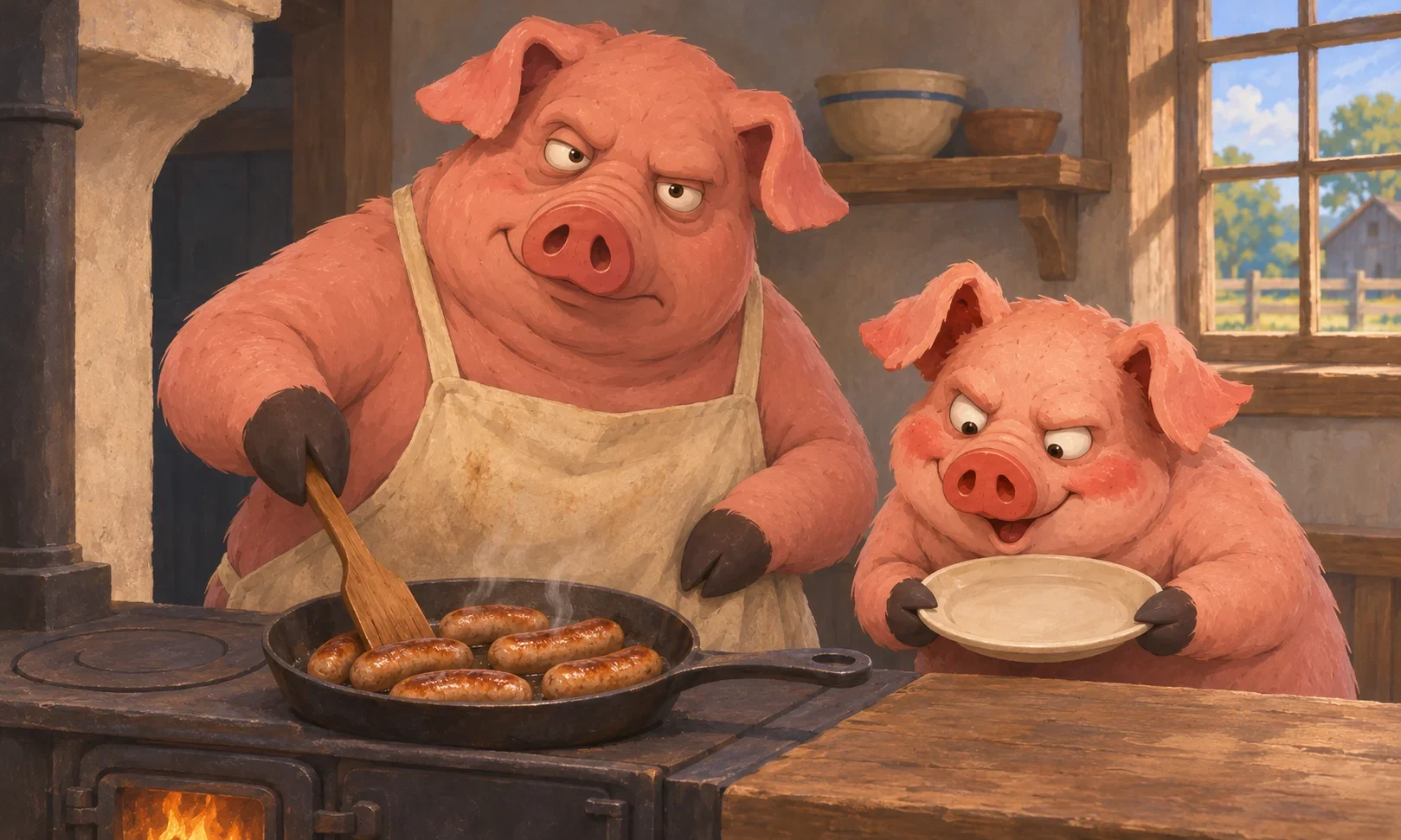
Meet Guanciale
Plays Gin Rummy at Expert levelGin Rummy · Expert levelPiedro's father, cured slow and well seasoned. Forty winters at the farmhouse table: remembers every card, never hurries, never changes his mind, and only smiles once he has won.
Guanciale tells you how to beat Guanciale.
Take an early knock
Waiting for gin gives me another draw, and another chance to knock first. An early knock often earns useful points. Late in the hand, a knock with 9 or 10 is easier to undercut, so try to get that count lower.
Make the pickup worth showing me
Take a discard that completes a meld or lets you knock. You're showing me a card you hold, so get something for that information. A stock draw keeps the new card hidden.
Let go of lone face cards
That unmatched king is 10 deadwood points if I knock. Discard it early if it has no pair or useful suited neighbour. A pair of kings has a reason to stay; a lone king waiting for two more cards has much less.
Keep two ways to finish a run
The 6 and 7 of hearts can use a 5 or an 8. The 5 and 7 need the 6. Two neighbouring cards give you more chances than a gap, so keep those connections together.
Watch what I take
If I pick up the 8 of clubs, another 8 or a nearby club could be what I'm after. Be careful with your 7 and 9 of clubs. My discards will tell you more as the hand goes on.
Get your deadwood down before I knock
As the stock shrinks, trade high unmatched cards for low ones. If I knock, those low cards cost you less. Finish with the same deadwood as me or lower after laying off, and you score the difference plus the 25-point undercut bonus.
Questions about Gin Rummy
What is deadwood in Gin Rummy?
Deadwood means the cards in your hand that aren't part of a set or run. Your deadwood total is the value of those cards added together: aces count as 1, number cards count as their face value, and jacks, queens and kings count as 10 each. Your total appears beside your hand.
When can I knock?
You can knock after drawing if your discard will leave you with 10 or fewer deadwood points. Select the card you want to discard, then press Knock to end the hand. If your discard leaves no deadwood, use Gin instead. The table shows these buttons when a suitable discard is available.
What is the difference between gin and big gin?
You go gin when all ten cards left after your discard belong to melds. You score your opponent's deadwood total plus a 25-point bonus. Big gin means all eleven cards belong to melds after you draw, so you end the hand without discarding and receive a 31-point bonus instead. Your opponent cannot lay off cards in either case.
What is an undercut?
An undercut happens when you knock and your opponent has an equal or lower deadwood total after laying off. They score the difference plus 25 points; you score nothing. For example, if you knock with 8 and they finish with 5, they score 28 points. A tie gives them 25 points. Gin and big gin cannot be undercut.
What does laying off mean?
After your opponent knocks, you can add unmatched cards to their melds to reduce your deadwood. You could add a fourth 9 to their set of three 9s, or the 7 of hearts to their run of 4, 5 and 6 of hearts. The table does this automatically, choosing the combination that leaves you with the lowest deadwood total. You cannot lay off after gin or big gin.
Is the ace high or low?
Aces are always low. A-2-3 of the same suit is a valid run; Q-K-A and K-A-2 are not. An unmatched ace is worth 1 deadwood point.
Can I discard the card I just took from the discard pile?
No. If you take the top card of the discard pile, you have to discard a different card that turn.
Can I look through the discard pile?
No. You can see only the top card. You'll need to remember earlier discards as they're played.
What happens when the stock gets down to two cards?
The last two stock cards are not drawn. Once a draw leaves two cards in the stock, the player finishes their turn. If they discard without knocking or going gin, the hand ends in a draw. Neither player scores, and the same dealer deals again.
How many points do I need to win?
The first player to reach 100 points wins. You can choose a target of 150 or 250 in New game instead. Scores carry over between hands, and there are no extra end-of-game bonuses.
Can I play Gin Rummy against the computer for free?
Yes. Open this page and a match against a computer opponent starts automatically. You don't need an account or a download. To choose a different opponent, open New game.
How is Gin Rummy different from Rummy?
Gin Rummy is a two-player game with ten cards each. You keep your melds in your hand until the hand ends, and you can knock while you still have some unmatched cards. In basic Rummy, players lay melds on the table during their turns and try to get rid of all their cards. Other Rummy variants have their own rules.


